martes, 30 de marzo de 2010

We want NAMES: The UK corporate structure

After the past general view of the industry, it would be interesting to know names. Who is in charge of those processes in the UK? Which companies are the bigger owners and players of the British advertising industries?


From the biggest world companies to the individuals this is the big picture:


Most large agencies had spread their specialised in-house departments as separate agencies. As the number of individual agencies has increased, ownership of those agencies has concentrated. Now there are many mergers and acquisitions, and a small group of holding companies at the top of the industry. (Adbrands.net, 2010).


According to Adbrands.net and Campaignlive.co.uk, there are now 5 major international advertising groups who control an enormous number of adversiting agencies globally, that notoriously influence the UK industry:


Omnicom, WPP, Interpublic, Publicis Groupe and Havas.


Then at next level, there are a small number of mid-size holding company groups; in the UK the are:


Omnicon:

Abbott Mead Vickers BBDO
DDB London
tbwa london


WWP:

JWT RKCR/Y&R
Ogilvy Advertising
Grey London
United


Interpublic:

McCann Erickson
Lowe
DraftFCB


Publicis:

Bartle Bogle Hegarty (UK)
Publicis
Leo Burnett
Saatchi &Saatchi
Fallon


Havas:

Euro RSGC London
Euro RSCG Fuel


Next, there are "micro-networks": Similar to the major networks, but they operate a far smaller network, usually in key regional centres. They generally offer custom made service for more demanding multinational clients (Adbrands.net, 2010).


There is a final step: standalone companies, could be independent or owned by one of the major groups. They tend to operate only in their own country, although they may have links to agencies in other markets. These are what we know as advertising agencies.

A Bit of Inspiration...


This post is dedicated to a big personality and a great example to follow in the UK advertising industry: the legend, Paul Arden.


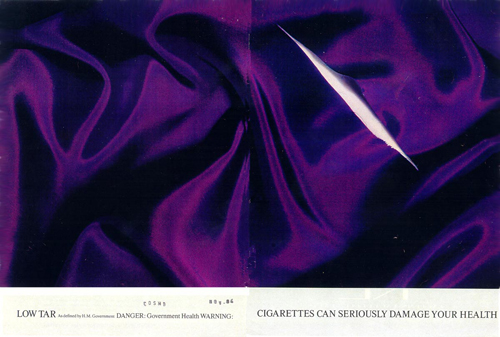
He was the mind behind some of the greatest British advertising campaigns including British Airways and Silk Cut, founded several projects, and wrote 3 great books; one of them remains as a remarkable best-seller.


But, how did he manage to do all these things? With huge passion and extreme perfectionism:
Paul Arden was born on April 7th of 1940 in Sidcup, Kent. He was the son of a commercial artist. He attended Beckenham Art College.


His first job as a graduate was washing out water pots for the artists. He later moved through different agencies, such as Ogilvy & Mather and Doyle Dane Bernbach, for many years where he gained lots of experience; until in 1979, he was hired as an art director by Saatchi & Saatchi, where his career as an advertiser boosted to the top.


He worked there for 14 brilliant years. For much of his career we also worked with Jeff Stark, with whom he later became joint creative director for the agency until 1987, when Stark said goodbye to the agency and Arden became executive creative director. In all these years, he contributed to the development of campaigns for Nivea, Toyota, Anchor Butter, British Airways, Ryvita, Trust House Forte, Fuji, Alexon, Silk Cut, among others. He left Saatchi and Saatchi in 1992, but he still acted as a consultant on important accounts until April of 1995.


Later on, he spent the next years developing new personal projects and helping students and young creatives to succeed. He once said: "We are all advertising, all of the time. Even the priest, with all his or her fervor, is advertising God".


He founded with his daughter in law and her brother Arden, Sutherland-Dodd, a film company, starting a career as a commercial director mainly in Europe.


He also fostered a very successful second career as a writer. He wrote for many years a weekly column in The Independent, which was followed by the publication of his first book "It's Not How Good You Are, Its How Good You Want To Be" (2003), which sold over half million copies. Later on, he also wrote "Whatever You Think, Think The Opposite" (2006), and "God Explained In A Taxi Ride" (2007).


Additionally, he ha a big passion for photography, so in 2003 he settled up with his wife Toni the gallery Arden & Anstruther, in Petworth, West Sussex.


He was always outstanding because of his unpredictable behavior and exuberant perfectionism, which really, only reflected his intense passion. People who worked for him often tell stories of having seen any artwork considered by Mister Arden as mediocre ripped of by himself.
He strongly believed in the power of the will and he was utterly positive. In one opportunity, he did a conference with a naked man next to him. Arden said: "He has no labels, no Gucci or Armani, you don't even know his name. He could be the manager of a shoe store, he could be the director of the company with a Jaguar, he could be a government minister with two Jaguars... All he has to do is want it enough."


Paul Arden passed away the 2nd of April of 2008 due to a heart attack. There is no doubt that he notoriously marked the British advertising industry.

jueves, 4 de marzo de 2010

Thinking about regulations


Nowadays, there are tons of laws, taxes, and monitoring policy held within the advertising industry field that shape the way the advertising that we see it´s created, distributed and displayed. Regulations of the advertising industry cover a variety of aspects, such as placement, timing and content.

But when we talk about the cultural industries vs. policy, LSE scholar Andy Pratt says that they might sound completely opposite, and that they do not embody each other goals and concepts. Creative industries suggests innovation, creativity, individuality, personality, colors and variety...when in the other hand, regulation sounds like rules, uniformity, standardization, boredom and sabotaging the freedom of expression.

Well, it can't be that bad isn't it? We have to acknowledge the facts that these industries send out information to millions of people through mass media; regulation in this framework adds a certain organization and sensibility rather than stopping innovation. Actually, these organizations are aware of the opportunities and potential of the cultural industries; particularly in the UK, where the advertising industry - our main interest in this blog - it's blooming quickly, as it becomes bigger and better. To me, the regulation of this bodies' purpose has to do with morals, cultural sensibility and efficiency.

Who make these regulations? There are main organizations in charge of that in the UK, one of them it's the Advertising Standards Authority. They state in their official Website that they are an independent organization from the government and advertising industry, which act as a watchdog; they monitor the advertising campaigns to protect "high standard and quality of the advertising and benefits to the consumers". They do so by appliying the "Advertising Codes" and the established "standards of service", which include aspects such as credibility, honesty, decency, and legal aspects.

Another important regulator is Ofcom. This is a more broad regulator as it covers many fields of communication. They also state on their Website that their main goal is to improve communications services in order for the people in the UK to receive the best from it; no scams, sharp practices or lies. Ofcom exclusively operate basing their measures in the "Communications Act 2003", a Parliament Act.

Now if we look at the big picture, we realize that it is not as bad as it sounded!. Regulations offer a great opportunity of fair and honest media which means a lot of benefits for the consumers. Good, healthy competitive, respectful and sensitive advertising is the key for a efficient and effective effect for us and the advertisers.