sábado, 1 de mayo de 2010

Will new social groups create mass media?


The answer is YES! it's already happening!


Nowadays, social networking it's everywhere, all the time. We use it to communicate with old, new, close and distant friends, we plan our events, we share ideas, feelings, beliefs, points of view, opinions, we can even use this for academic and professional purposes. It may be so common that probably many of us haven't realise the big opportunity this could mean it terms of expanding to new forms and channels of media - but it's clearly sure that the players of the media industries have!


Let's start from the very beggining, why do we create social groups? and why do we love them so much?. According to scholars (McKenna, Bargh; 1998) from the American Psychological Association, Internet groups "allow individuals to interact with others in a relatively anonymous fashion and thereby provide individuals with concealable stigmatized identities a place to belong not otherwise available. Thus, membership in these groups should become an important part of identity". If we break this down to pieces it's very clear: As humans, we like to share and be 'conected' to those we feel identified with. With these internet communities we can find those people alike, and reach them in a accesible, quick, and impersonal way (which you know it makes it all much easier!). No wonder why we are so hooked on internet communities! we love them because they open to us the oportunity to belong to groups, sharing and exchanging much of the information that build our identity.


It is precisely this popularity that have builded up this movement. If we put together all the people, time and devotion putted on these sites we can find that there's pretty complete and interesting media content out there, created by the members of the groups themselves. Photos, literature, films, blogs, you name it and there will be material done by somebody in a e-community. Of course this have been noticed by many people from the mainstream media intustries who identify this mass movement with big oportunities of broadcasting and marketing.


This emerging trend it's still in the process; but we can still appreciate some recent cases. For example, we can travel to Argentina to meet the new social group, promoted by teens called among them "Floggers". It all started as a colorful clothing fashion, but the ideas and main image of these teenagers have been expanded by themselves through social networking, specifically through the main site where they post and share their material: Fotolog.com. Now, there are some media channels taking this further with new projects like merchandising, and even a new TV serie based on this group culture.


And there are some more out there, we just have to search the web and look out to relevant new trends and fashions. Which do you think will be the next media sensation based on a internet group?


miércoles, 28 de abril de 2010

How is advertising converging?


For this post, I had a interesting and eye opening chat with my blogger and friend Julia, in which we discussed and compared many findings and thoughts we've putted out there in our blogs since the beginning of this journey. At a point of this conversation we found ourselves thinking about a few questions: Where is convergence taking our favorite media field (Advertising!)? How is it changing? Which ones will be the next trends of the advertising industry due to this?

Well we agree when we say that for the advertising industry, convergence means a big open door leading to changes, innovations, and a future full of opportunities regarding distribution and effectiveness of campaigns; they just need a little of imagination and creativity, qualities that this industry knows how to exploited. We can find from different other sources that many experts have this thoughts as well; for example, the online marketing resource site Knowthis.com (2010) states "...convergence allows one media outlet to take advantage of features and benefits offered through other media outlets...convergence opens many potential opportunities for marketers to target customers in ways not available with traditional advertising...".

The versatility of advertising allows it to adapt and get the best out of changes, that's why no matter what the future of different traditional media channels due to convergence is, this industry always find it's way to the people.

As the digital media changes more each time, there are more and more new forms of promoting products that we've never seen before. While talking this with Julia we decided to divide this post and explore which of these new trends calls out attention the most. I will be talking now about the innovations of publicity developed for mobile and new smart devices.


According to Perspective Internet Marketing Website (2010), "Tablets such as iPad and others, smartphones such as iPhone, Google NexusOne, Droid, and Blackberry are expected to outsell desktop computers in 2011". This is a big deal, and the advertising companies it represents a crucial tool to spread and distribute their ads.

There are many ways in which this change is taking place; a big one are mobile applications or apps. They represent a fun, clever and significant way to advertise. "Apple has generated a lot of interest among consumers, who now know that apps are a key part of their mobile experience...marketers are feeding their hunger and engaging consumers by delivering a mix of in-application advertising and branded mobile apps providing utility and/or entertainment" Mobile Marketer.com (2010).


martes, 30 de marzo de 2010

We want NAMES: The UK corporate structure

After the past general view of the industry, it would be interesting to know names. Who is in charge of those processes in the UK? Which companies are the bigger owners and players of the British advertising industries?


From the biggest world companies to the individuals this is the big picture:


Most large agencies had spread their specialised in-house departments as separate agencies. As the number of individual agencies has increased, ownership of those agencies has concentrated. Now there are many mergers and acquisitions, and a small group of holding companies at the top of the industry. (Adbrands.net, 2010).


According to Adbrands.net and Campaignlive.co.uk, there are now 5 major international advertising groups who control an enormous number of adversiting agencies globally, that notoriously influence the UK industry:


Omnicom, WPP, Interpublic, Publicis Groupe and Havas.


Then at next level, there are a small number of mid-size holding company groups; in the UK the are:


Omnicon:

Abbott Mead Vickers BBDO
DDB London
tbwa london


WWP:

JWT RKCR/Y&R
Ogilvy Advertising
Grey London
United


Interpublic:

McCann Erickson
Lowe
DraftFCB


Publicis:

Bartle Bogle Hegarty (UK)
Publicis
Leo Burnett
Saatchi &Saatchi
Fallon


Havas:

Euro RSGC London
Euro RSCG Fuel


Next, there are "micro-networks": Similar to the major networks, but they operate a far smaller network, usually in key regional centres. They generally offer custom made service for more demanding multinational clients (Adbrands.net, 2010).


There is a final step: standalone companies, could be independent or owned by one of the major groups. They tend to operate only in their own country, although they may have links to agencies in other markets. These are what we know as advertising agencies.

A Bit of Inspiration...


This post is dedicated to a big personality and a great example to follow in the UK advertising industry: the legend, Paul Arden.


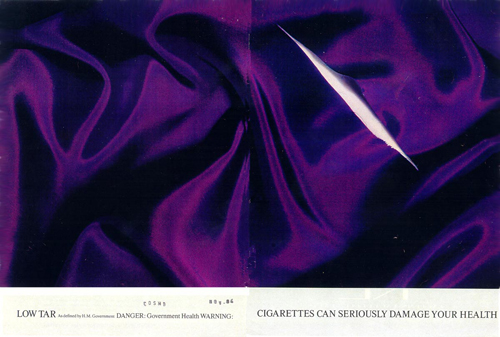
He was the mind behind some of the greatest British advertising campaigns including British Airways and Silk Cut, founded several projects, and wrote 3 great books; one of them remains as a remarkable best-seller.


But, how did he manage to do all these things? With huge passion and extreme perfectionism:
Paul Arden was born on April 7th of 1940 in Sidcup, Kent. He was the son of a commercial artist. He attended Beckenham Art College.


His first job as a graduate was washing out water pots for the artists. He later moved through different agencies, such as Ogilvy & Mather and Doyle Dane Bernbach, for many years where he gained lots of experience; until in 1979, he was hired as an art director by Saatchi & Saatchi, where his career as an advertiser boosted to the top.


He worked there for 14 brilliant years. For much of his career we also worked with Jeff Stark, with whom he later became joint creative director for the agency until 1987, when Stark said goodbye to the agency and Arden became executive creative director. In all these years, he contributed to the development of campaigns for Nivea, Toyota, Anchor Butter, British Airways, Ryvita, Trust House Forte, Fuji, Alexon, Silk Cut, among others. He left Saatchi and Saatchi in 1992, but he still acted as a consultant on important accounts until April of 1995.


Later on, he spent the next years developing new personal projects and helping students and young creatives to succeed. He once said: "We are all advertising, all of the time. Even the priest, with all his or her fervor, is advertising God".


He founded with his daughter in law and her brother Arden, Sutherland-Dodd, a film company, starting a career as a commercial director mainly in Europe.


He also fostered a very successful second career as a writer. He wrote for many years a weekly column in The Independent, which was followed by the publication of his first book "It's Not How Good You Are, Its How Good You Want To Be" (2003), which sold over half million copies. Later on, he also wrote "Whatever You Think, Think The Opposite" (2006), and "God Explained In A Taxi Ride" (2007).


Additionally, he ha a big passion for photography, so in 2003 he settled up with his wife Toni the gallery Arden & Anstruther, in Petworth, West Sussex.


He was always outstanding because of his unpredictable behavior and exuberant perfectionism, which really, only reflected his intense passion. People who worked for him often tell stories of having seen any artwork considered by Mister Arden as mediocre ripped of by himself.
He strongly believed in the power of the will and he was utterly positive. In one opportunity, he did a conference with a naked man next to him. Arden said: "He has no labels, no Gucci or Armani, you don't even know his name. He could be the manager of a shoe store, he could be the director of the company with a Jaguar, he could be a government minister with two Jaguars... All he has to do is want it enough."


Paul Arden passed away the 2nd of April of 2008 due to a heart attack. There is no doubt that he notoriously marked the British advertising industry.

jueves, 4 de marzo de 2010

Thinking about regulations


Nowadays, there are tons of laws, taxes, and monitoring policy held within the advertising industry field that shape the way the advertising that we see it´s created, distributed and displayed. Regulations of the advertising industry cover a variety of aspects, such as placement, timing and content.

But when we talk about the cultural industries vs. policy, LSE scholar Andy Pratt says that they might sound completely opposite, and that they do not embody each other goals and concepts. Creative industries suggests innovation, creativity, individuality, personality, colors and variety...when in the other hand, regulation sounds like rules, uniformity, standardization, boredom and sabotaging the freedom of expression.

Well, it can't be that bad isn't it? We have to acknowledge the facts that these industries send out information to millions of people through mass media; regulation in this framework adds a certain organization and sensibility rather than stopping innovation. Actually, these organizations are aware of the opportunities and potential of the cultural industries; particularly in the UK, where the advertising industry - our main interest in this blog - it's blooming quickly, as it becomes bigger and better. To me, the regulation of this bodies' purpose has to do with morals, cultural sensibility and efficiency.

Who make these regulations? There are main organizations in charge of that in the UK, one of them it's the Advertising Standards Authority. They state in their official Website that they are an independent organization from the government and advertising industry, which act as a watchdog; they monitor the advertising campaigns to protect "high standard and quality of the advertising and benefits to the consumers". They do so by appliying the "Advertising Codes" and the established "standards of service", which include aspects such as credibility, honesty, decency, and legal aspects.

Another important regulator is Ofcom. This is a more broad regulator as it covers many fields of communication. They also state on their Website that their main goal is to improve communications services in order for the people in the UK to receive the best from it; no scams, sharp practices or lies. Ofcom exclusively operate basing their measures in the "Communications Act 2003", a Parliament Act.

Now if we look at the big picture, we realize that it is not as bad as it sounded!. Regulations offer a great opportunity of fair and honest media which means a lot of benefits for the consumers. Good, healthy competitive, respectful and sensitive advertising is the key for a efficient and effective effect for us and the advertisers.

domingo, 21 de febrero de 2010

The Advertising Structure in the UK

This graphic below shows the big picture of how the advertising industry generally works. Playing attention to the main players and their connexions, we can get a good sense of how this process evolve from the simple idea, to millions of people trhough mass media.


martes, 16 de febrero de 2010

The Business Idea


This is just one example of what a crazy business idea with could get out of a brainstorm of words.


Creating an interactive gallery, museum or exhibition with a very broad sense of the topic psychology and human behaviour. The concept would be a kind of "journey" into the human mind; and since it's a subjective and difficult thing to embody, the display of the exhibition would use a lot of lights, sounds, video screens, movement,images and colors that could help to make the audience feel to be summerged in a person's thinking. The aim would be to show to the people how human behaviour and our brain works.


The exhibition would be designed in an specific way to catch general public's attention from all ages; it would count with many interactive screens, games, holograms, tunnels, dark rooms, and all kinds of devices that could make the visitors sumerge their attention in the information, that would be delivered in all kinds of ways (sounds, texts, videos, etc.). It must include and make use of psychology and advertising methods to make everything appealing and fun and easy to learn. The exhibition would cost a fair yet accesible price to access.


One image: A dark room showing videos of memories and unconscious thoughts

One sound: An approach of what would sound like to hear all the thoughts that a person haves in a minute

One word: Knowledge

Talking about Convergence...


Convergence is a new phenomenon that its taking over the minds of producers and media makers...where are the media channels going when now there are new devices capable of joining them?

The variety points of view and opinions about this subject are endless. In one hand, there are many people that believe that some traditional media channels, such as press, magazines and TV are in their way of disappearing due to the new technology. Now we can watch TV through the Internet on our computers, and read magazines and news papers on our phones.
Some other reject this idea. They argue that people won't stop enjoying the benefits of the old forms of media; maybe because of the pleasure of recognition and convenience of tradition.
Either way, we will have to wait and still speculating and expecting the changes of this to prove our beliefs. Moreover, there are even more questions to be answered about this. For example the roll of convergence in London's multiculturalism and creativity?
Many agree that convergence, meaning technological advances that innovate the city, and better communication systems that bring people closer; will contribute to improve these features of London.
Lastly, we can talk about how convergence can help the creative industries in the UK to become more varied and multicultural. Advance, technology, innovation, and forward thinking are some of the ideas that arises when we talk about convergence, and all of these are factors and facilitators to make industries more open.

10 Useful Sources


Below, there's a list of 10 good resources related to our field. This can help us a lot for researching advertising basic information and the understanding of their main concepts and ideas:


  1. Academic Article

Pratt, Andy C. "Creativity and The British Advertising Industry." The London School of Economics website. London School of Economics, 01 Mar. 2004. Web. http://www2.lse.ac.uk/geographyAndEnvironment/research/AP_AdvertisingUKJapan/Creativity%20and%20the%20British%20Advertising%20industry3.pdf.


Very extent but clear and easy to read article by a scholar from LSE. The principal aim of the research is to "examine the role that creativity plays in British advertising industry"(Pratt, 2004).


Contains well explained and extent history of advertising in Britain, and the history of the leading advertising companies until now.


2. Advertising Standards Authority Statement


UK. Advertising Standards Authority. http://www.asa.org.uk/. ASA, 2008. Web. http://www.asa.org.uk/About-ASA/Annual-Report.aspx?gclid=CPL5_Mjn058CFZAA4wodal2jcg.


A report full of statistics, facts and some explanations, examples and details on what this authority has done, specially in 2008; what are their plans, their aims and how do they act in order to achieve them.


This is good to understand what sort of censoring the government does and how the process is done.


3. Department for Culture, Media and Sports Statement


UK. Department for Culture, Media and Sports. Creative Industries Economic Estimates Statistical Bulletin. DCMS website, Jan. 2009. Web.

This is a statement by the DCMS highlighting the most important economic facts and statistics that the creative industry contributed from 1997 to 2007.


It is helpful to visualize better how this industry have behaved and developed through the last decade.


4. Advertising Blog


Web log post. Madcomments. Centaur Media Ltd., 2006. Web. http://www.madcomments.co.uk/.


Professional, yet casual blog where anyone working in the media can create an account and speak their opinions on new advertising tendencies, ads, campaigns, etc ; as well as posting new materials that they want to debate or point out as interesting.


An authentic view of what the workers think of the industry and the media.


5. Advertising Article on Website


"Ad Age Advertising Century: Top 100 Advertising Campaigns." Advertising Age - Ad & Marketing Industry News. 1999 & 2005, Advertising Age. Web. http://adage.com/century/campaigns.html.


The list of which advetising campaings, according to Advertising Age website, have been the top 100 most successful ones of the last century.


This is useful information to be aware of the advertising history: how advertising have changed and developed through the past years and which examples of campaigns have been influential.


6. Advertising Online Newspaper


AdWeek. Nielsen Business Media Marketing and Media Group, 2010. Web. http://www.adweek.com/aw/index.jsp.


This website is good source of news, articles, reviews, opinions, comments and information regarding the advertising and marketing field.


I find it very useful since it gather very relevant information and introduce new findings from studies made by the leading advertising and marketing companies in the world.


7. Advertising article on Website


Duncan, April. "10 Ways to Run Your Own Advertising Campaign." Advertising - Advertising Careers and Jobs - Advertising Strategies - Advertising Help for Small Businesses. About.com. Web. 03 Feb. 2010. http://advertising.about.com/od/smallbusinesscampaigns/a/youradcampaign.htm.


This is a brief list of tips and advice on how to manage to create a good advertising campaign and how to work on it.


It contains in a general way, important points to think about.


8. Academic Journal


Waterson, M. J. "Advertising Facts and Advertising Illusions." International Journal of Advertising P207-221, 15p 3.3. Business Source Complete. Web. http://search.ebscohost.com/login.aspx?direct=true&db=bth&AN=11943189&site=ehost-live.


A long article from an academic journal.


It contains very good and clear analytical value. In this text Waterson writes about how advertising is usualy portrayed as negative, specially from sociologists and economists; but he states that actually, the absence of advertising would lead to less choices and innovation


9. Advertising Blog


Web log comment. Business Advertising Blog. WordPress, 2010. Web. http://www.businessadvertisingblog.co.uk/.


Another blog dedicated to advertising. This posts, comments and feedback are way more professional than the previous one.


The ideas that they publish are very clear and concrete; the purpose of it is more informational.


10. Advertising Newletter


Brand Republic. Haymarket Media, 2010. Web. http://www.brandrepublic.com/.


A news site concerned with advertising, marketing, media and public relations. This is a very much broader site than the first one.


It is also a good way to be updated in every field that realted to advertising.

The Bigger Picture: Staticstics and Facts of Advertising in the UK


The advertising industry is a highly productive one for the UK in the last few years. Official stats say that:


  • The total UK expenditure in advertising in 2007 was £18.0 billion.

  • In 2006, the GVA of the advertising industry in the UK was £5,300 million, which corresponds to 0.6% of the UK GVA.

  • In 2007, 93,800 people were employed in the advertising industry.

  • There are 13,200 advertising businesses registered in the UK.

  • There were also many regulations held in 2008. The Advertising Standards Authority (ASA) received 26,433 complaints about 15,556 ads from media including television, radio, press, internet and posters, from which 2,475 were obligated to be modified or withdrawn.